

How much does it cost to go to Zambia?
Planning a trip to Zambia requires careful budgeting because costs vary drastically between budget backpacking and luxury safaris. You'll mainly be spending your money on five things:
- Flights
- Accommodation prices
- Safari costs
- Local transportation
- Food expenses
The average daily budget for a typical traveler is approximately $955. Trust me, I know staring at a spreadsheet of African safari costs can feel a bit overwhelming at first! Round-trip flights from the United States will be your biggest upfront expense.
What is the average daily budget for a trip to Zambia?
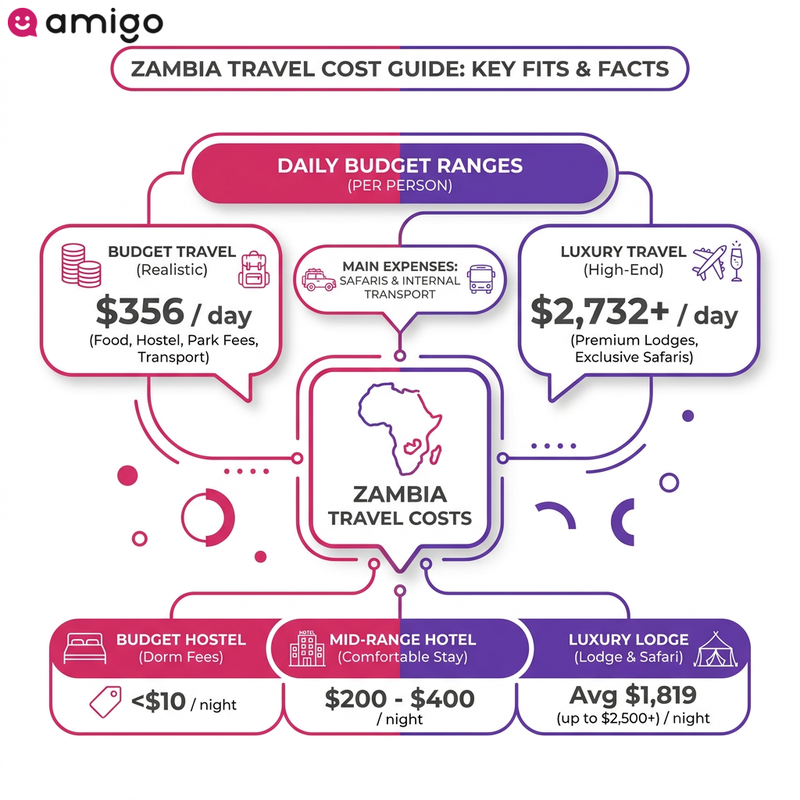
Your exact daily budget depends heavily on your activities and accommodation. Budget travel requires approximately $356 per person per day, and luxury travel costs upwards of $2,732 per day. While basic survival costs (food and a hostel bed) only run about $25 daily, a realistic budget traveler should plan for an average of $356 per day when factoring in the amortized costs of essential park fees, overland transport, and occasional basic safari activities. Mid-range trips sit comfortably in the middle. Safaris and internal transport consume the largest portion of your overall costs, whether you select basic campsites or premium lodges.
How do peak and low seasons affect Zambia travel costs?
Timing your trip plays a huge role in flight and accommodation prices. The dry peak season from June to October offers the best wildlife viewing, which directly increases safari costs and hotel rates. Mid-range accommodation prices often double during these peak months compared to the wet low season.
Traveling during the wet low season reduces expenses, making it the cheapest time to visit. Interestingly, while June marks the beginning of the dry peak season, it's often the cheapest month to fly as airlines transition their schedules, whereas December holiday flights average over $2,000.
Zambia travel cost breakdown
| Category | Estimated Cost | Details |
|
Overall daily budget |
$356 – $2,732+ per day |
|
|
Flights (from US) |
$961 – $2,322 |
Standard round-trip cost depending on the month of travel. One-way flights start at approximately $705. |
|
Accommodation |
<$10 – $1,819+ per night |
|
|
Safaris & tours |
$300 – $2,530+ per person |
|
|
Food & drink |
$12 – $24 per day |
Average daily cost is $24 for standard restaurant dining. Eating local dishes like nshima keeps expenses near the $12 daily minimum. |
|
Transportation |
Varies by method |
|
|
Visas & entry fees |
$50 – $80 |
Digital e-visa application costs $50 for a single-entry permit and $80 for a multiple-entry pass. |
|
Park fees & attractions |
$20 – $30 per day |
Standard national park entry costs $20 to $30 per person per day. Victoria Falls requires a $20 entrance fee. |
What currency is used for transactions in Zambia?
The Zambian Kwacha is the official currency and you'll need it for day-to-day transactions. Premium safari lodges often accept United States Dollars, but local markets and transportation require the Kwacha. You can easily withdraw local currency from ATMs in major cities. As a quick pro-tip from my own travels, always keep a stash of small Kwacha bills hidden in your daypack, as ATMs outside of Lusaka or Livingstone can occasionally run out of cash.
Tracking local market purchases helps keep your spending in check. Tipping staff averages $15 per day, and staff sometimes accept USD. However, locals prefer Kwacha for small purchases and minor expenses.
How much do flights to Kenneth Kaunda International Airport cost?
Airfare to Kenneth Kaunda International Airport in Lusaka takes up a big chunk of your travel budget. Prices fluctuate significantly based on the season. One-way flights from the United States start at approximately $705, and standard round-trip flights range from $961 to $2,322, depending on the specific month of travel.
Booking tickets during the wet low season saves you a lot of money compared to the busy peak season. Book these international flights early to save money for your internal safari flights.
What are the visa and entry costs for Zambia?
You'll find that calculating mandatory entry fees is an essential part of planning your trip. Entry requires budgeting for visas and health certificates. When planning, remember that fulfilling strict visa requirements involves providing specific documentation, such as a passport valid for 6 months and a return flight ticket.
Sort this out before you fly so you aren't hit with surprise fees at the border, giving you a clearer picture of your remaining budget for the actual trip.
How much does a Zambia e-visa cost?
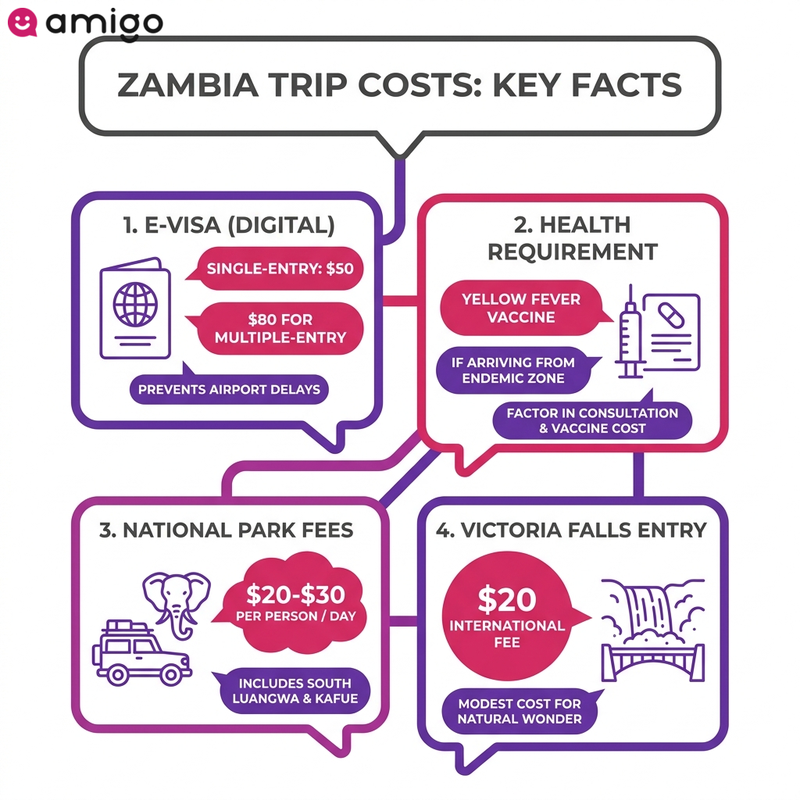
A digital e-visa application costs $50 for a single-entry permit and $80 for a multiple-entry pass. Securing this online document prevents airport delays.
Since visa fees are a fixed cost, every traveler pays the same amount, whether you're backpacking or booking a luxury lodge.
Does Zambia require a yellow fever vaccination?
If arriving from an endemic zone, you'll need a yellow fever vaccination. You must present this certificate to border officials upon entry, so factor the cost of the travel clinic consultation and the vaccine itself into your pre-trip budget.
Getting solid travel insurance provides additional protection and keeps unexpected out-of-pocket expenses from ruining your trip.
Should you use an eSIM card for travel in Zambia?
eSIM cards are a cheap and easy way to stay online during your trip. For instant mobile data access, purchasing a dedicated eSIM card for Zambia gives you reliable internet usage immediately upon landing. Digital activation provides distinct advantages over physical SIM cards, such as bypassing airport kiosks and avoiding physical swapping. Travelers often set up these digital profiles upon arrival in Lusaka for immediate access to local data networks.
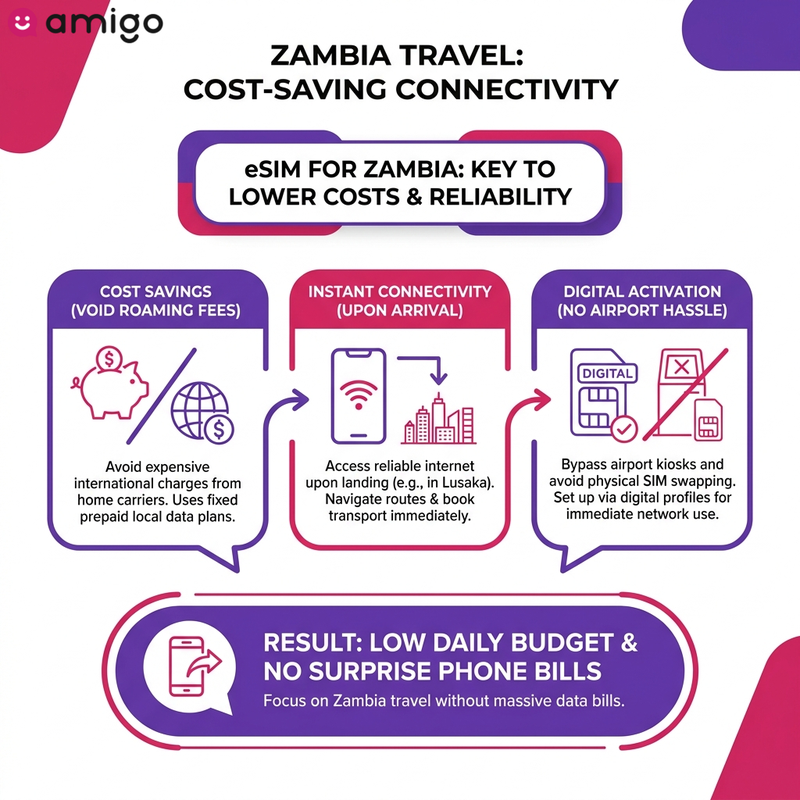
Reliable connectivity is a must for navigating routes and booking local transport. Grab an eSIM so you don't come home to a massive phone bill.
How much does accommodation cost in Zambia?
Accommodation prices in Zambia vary wildly, catering directly to both extreme budget travel and high-end luxury safaris. Geographic locations, from affordable city centers to premium national parks, play a huge role in specific hotel rates.
If you want comfort without the luxury price tag, look for independent lodges located just outside the main national park gates. You'll often find excellent amenities for a fraction of the cost.
What are the prices for budget hostels and mid-range hotels?
Budget and mid-range lodging offer comfortable stays without the premium price tag of a luxury safari lodge. A standard backpacker hostel supports cost-conscious travel, with dorm fees and basic bed charges often falling under $10 per night. Mid-range travel provides a comfortable hotel costing between $200 and $400 per night. Mixing basic hostels and standard hotels helps stretch your money further during an extended trip.
Keep an eye out for weekend surcharges to avoid overpaying. Doing this leaves more funding for essential activities like safaris and local transportation.
How much do luxury safari lodges cost?
A luxury safari lodge in Zambia offers incredible luxury, but it will cost you. High-end accommodation prices average $1,819 per night, with specific hotel rates exceeding $2,500 per person. These properties sit in remote areas of pristine national parks like South Luangwa and Lower Zambezi.
That rate covers all-inclusive amenities, including:
- Gourmet meals
- Private guides
- Daily wildlife activities
Choosing remote camps means a larger portion of your funds will go toward logistics and premium lodging.
How much does transportation cost within Zambia?
Navigating Zambia involves choosing between expensive, time-saving aviation and affordable, slower overland transit. Three main modes of domestic travel are your main options:
- Internal flights
- Long-distance buses
- Car rentals
The vast distances between national parks will drain transportation budgets. Securing 4x4 vehicles provides flexibility for exploring remote areas and navigating rugged terrain. If you're on a tight budget, stick to public buses to save money.
What are the prices for internal flights?
Internal flights, including scheduled commercial trips and private charters, provide the fastest transit to remote national parks. However, flying will eat up a lot of your money. Domestic carriers connect Lusaka to distant safari hubs, such as the route from Kenneth Kaunda International Airport to Mfuwe International Airport.
Domestic air travel often costs $300 or more per flight. Weighing these costs against the time saved on rough roads is essential for mid-range or luxury travel.
How much does it cost to rent a 4x4 vehicle?
Renting a 4x4 vehicle is a must for independent self-drive safaris due to Zambia's rugged terrain. This is a major expense, but standard cars just can't handle unpaved areas like Kafue National Park.
Splitting car rentals among a group is more economical than booking internal flights.
What are the costs of local public transportation?
Local public transportation is the most budget-friendly method for getting around Zambia. Long-distance buses, including standard coaches and express liners, keep your daily costs low. Buses are a much cheaper alternative to a $300 charter flight for intercity travel. Passengers accept longer transit times in exchange for lower ticket prices and zero baggage fees. If you have the time and a good pair of noise-canceling headphones, taking the bus is actually a fantastic way to watch the beautiful Zambian countryside roll by.
While internal flights and car rentals quickly inflate your budget, mixing an affordable overland bus with occasional flights is a smart way to travel for mid-range travelers.
How much should you budget for food and drink in Zambia?
Food and drink expenses in Zambia are generally affordable if you eat at local establishments rather than tourist lodges. The average daily cost for meals usually hovers around $24 for standard restaurant dining.
Buying regional staples at local markets greatly reduces your food costs. Controlling these dining choices leaves you with more money for safaris for the trip.
What is nshima and how much does local food cost?
Nshima is the traditional staple food of Zambia, made from maize flour. Locals serve this local favorite with relishes like beans, vegetables, and meat stews. I highly recommend eating it the traditional way—with your bare hands—because it honestly just makes the whole experience more authentic. Eating local dishes is the best way to keep food expenses near the $12 daily minimum.
Opting for nshima at local eateries drastically reduces expenses for budget and mid-range travelers.
How much do safaris and wildlife tours cost in Zambia?
Safaris are the main attraction in Zambia and represent the largest variable in a traveler's budget. Safari prices span a massive spectrum, starting at $300 for basic options and exceeding $2,530 per person per night for ultra-luxury experiences. Prices usually depend on three things: guide expertise, geographic location, and camp exclusivity.
Exploring remote national parks involves selecting diverse wildlife tours, such as traditional game drives and specialized walking safaris. Booking an all-inclusive tour package often consolidates these expenses into a single upfront payment.
How much do all-inclusive tour packages cost?
All-inclusive tour packages are a great way to save money for managing safari costs in Zambia. Organized travel bundles average $329 per day, so you know exactly what you'll spend. These options consolidate essential expenses like lodging, meals, and wildlife tours.
Booking these fixed rates controls unexpected costs better than organizing independent travel.
What are the entrance fees for Zambia national parks?
National park entrance fees in Zambia are required every day for accessing protected areas. Standard entry costs average $20 to $30 per person per day. Premier national parks like South Luangwa and Kafue require these conservation charges.
This pricing structure mirrors the $20 fee for visiting Victoria Falls. Luxury packages often include these sightseeing fees, whereas independent travelers pay out of pocket.
How much do walking safaris in South Luangwa cost?
South Luangwa National Park is the birthplace of the walking safari in Zambia. These specialized wildlife tours are some of the most expensive options. High-end walking safaris are a staple of luxury travel packages, contributing to nightly costs that exceed $2,500. The necessity of expert guides is why they cost so much.
These excursions demand specific professionals, such as armed scouts and certified trackers. Booking these immersive activities will quickly eat up your funds if you prioritize luxury travel.
Which is more expensive, South Luangwa or Lower Zambezi National Park?
Safari costs are identical between South Luangwa National Park and Lower Zambezi National Park. Both are premium destinations aimed at luxury travelers. These national parks offer distinct wildlife tours, such as walking safaris in South Luangwa and water-based safaris in Lower Zambezi.
Both locations feature exclusive amenities, including 5-star lodges and private charters that push nightly costs over $2,500. Combining these parks will skyrocket your costs if you book expensive internal flights between them.
How much does it cost to visit Victoria Falls and Livingstone?
Visiting Victoria Falls from Livingstone is easy and affordable. International visitors pay a modest $20 entrance fee to view this natural wonder from the Zambian side. The basic entry charge covers standard sightseeing fees like the main gate ticket and the heritage toll. Booking an extreme excursion, such as a helicopter flight or a bridge swing, will cost you a lot more.
Premium add-ons, including photography packages and private guides, add up quickly. Reaching the entrance requires organizing local transportation from town to adjacent national parks like Mosi-oa-Tunya and Victoria Falls. Paying the standard $20 entry provides full access to the viewing path without requiring an expensive guided tour. Just remember a quick insider tip: bring a waterproof bag for your phone, because the famous spray from the falls will absolutely soak you to the bone!
How much does travel insurance for Zambia cost?
Travel insurance is an absolute must for a trip to Zambia to cover medical emergencies and remote evacuations. Purchasing a solid policy protects the large financial investment associated with high safari costs. This coverage is essential for participating in adventure activities like river rafting on the Zambezi and walking safaris in remote national parks. Standard policies cover potential medical evacuations from remote bush camps back to Lusaka or internationally.
While insurance adds a bit to your upfront costs, it's worth every penny for the peace of mind. A medical evacuation from the bush can easily bankrupt a trip, so consider this a non-negotiable expense.
Sources
- https://www.zambiaimmigration.gov.zm/for-visitors/
- https://wwwnc.cdc.gov/travel/yellowbook/2024/preparing/yellow-fever-vaccine-malaria-prevention-by-country/zambia
- https://www.mot.gov.zm/dnpw/?page_id=1726