

How much does it cost to go to Poland?
Poland is an affordable European destination where the average daily cost is approximately $82 (295 PLN) per person. A typical one-week trip comes to about $574 for a solo traveler, while couples typically spend $1,148 for a seven-day stay.
Here is what that budget includes:
- Accommodation costs
- Food expenses
- Transportation costs
The total cost depends on your travel style, which will determine your final bill. Prices here are significantly lower than in many Western European nations.
What is the average daily budget for a trip to Poland?
Your travel budget depends heavily on the travel style. Daily costs range from economical backpacking to exclusive high-end tourism. Expenses cover accommodation, food, and transportation, and prices differ greatly across these categories.
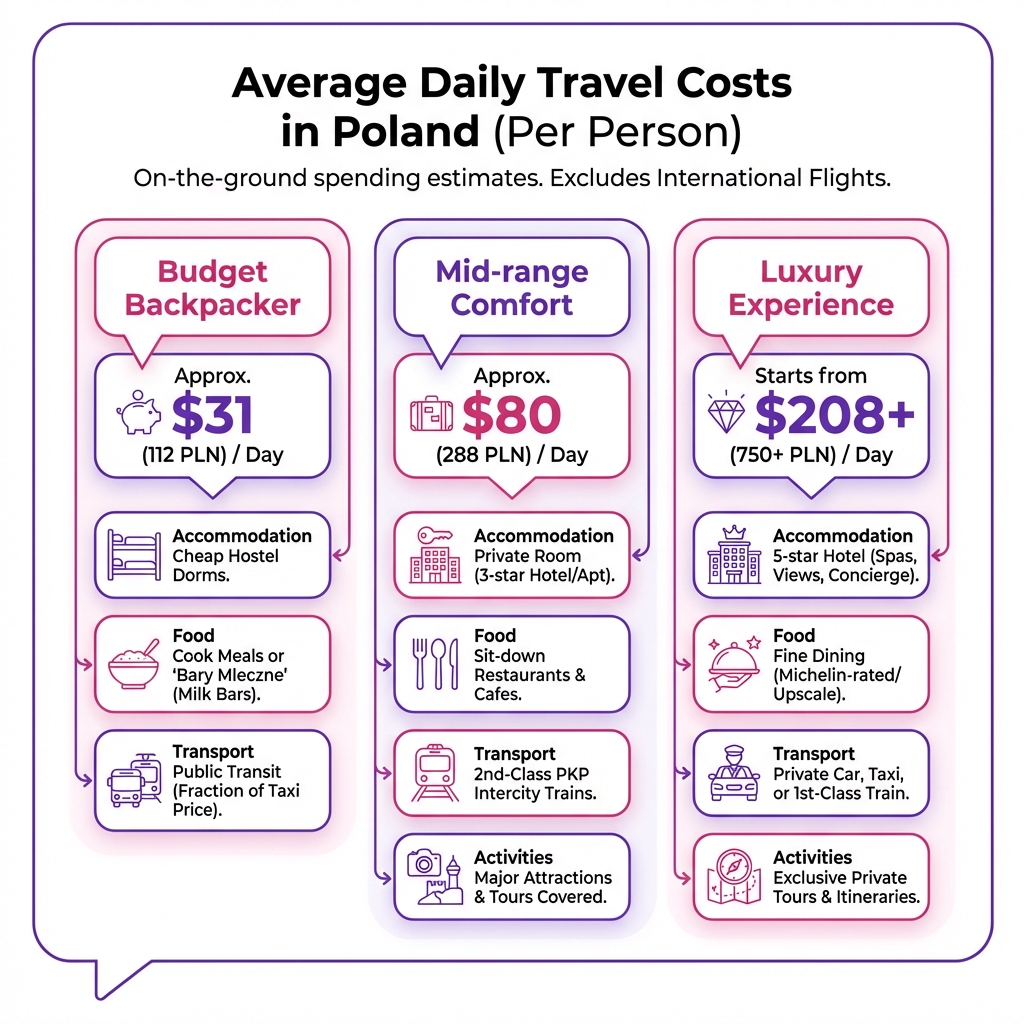
How much does a backpacker trip cost?
Budget backpackers can get by on $31 (112 PLN) per day. Travelers keep accommodation costs low by booking cheap hostel dorms.
You can save on food by cooking meals or dining at traditional milk bars known as bary mleczne. Public transportation is a fraction of the price of taxis for city transit.
What is the cost for a mid-range traveler?
A mid-range budget is around $80 (288 PLN) per day. For this price, you can expect private rooms in 3-star hotels or modern apartments, offering more privacy than hostels. Food expenses in this tier cover meals at sit-down restaurants and cafes rather than self-catering.
You can travel comfortably using second-class tickets on PKP Intercity trains. Sightseeing fees for major attractions and occasional paid tours are easily covered by this budget, giving you a good mix of ease and value.
How much does a luxury vacation cost?
Luxury travel in Poland starts from approximately $208 (750 PLN) per day. With this amount, you can secure accommodation in 5-star hotels in major cities like Warsaw and Krakow. At this level, you can expect spas, concierge services, and city views.
You can enjoy fine dining experiences at Michelin-rated restaurants or upscale bistros offering tasting menus. You'll likely swap public transit for private car rental services, taxis, or first-class train tickets. This estimate excludes international flight prices, focusing strictly on on-the-ground spending. An expansive budget opens the door to exclusive private tours and personalized itineraries.
How much do flights to Poland cost?
Flight prices to Poland fluctuate significantly depending on the season and how early you book. Airfare will likely be your biggest upfront expense. Prices peak during the summer peak season, with August typically being the most expensive month.
On the other hand, the off-season provides the lowest rates as demand decreases. If you book several months in advance, you'll reduce expenses compared to last-minute purchases. You'll likely fly into major airports in Warsaw, Krakow, Gdansk, and Wroclaw.
When is the cheapest time to fly to Poland?
January is usually the month with the lowest average airfare. It's the middle of the off-season, offering substantial savings compared to the peak season. If you're on a tight budget, look for flights from November through March.
Reduced costs during these winter months make up for the cold. Speaking from experience, the Christmas markets in December make the chill worth it. You can lower the total trip cost by securing tickets during this window. Flexibly scheduling flights away from major holidays further helps you save even more.
What are the accommodation costs in Poland?
Lodging is the biggest expense when planning a travel budget for Poland. While Poland is cheap, accommodation prices in Warsaw can rival Western Europe during peak season, so booking ahead is crucial. Location matters.
Major tourist hubs like Warsaw, Krakow, Gdansk, and Wroclaw generally have higher prices than smaller towns or rural areas. If you want to stay near the center, expect to pay more. You will typically pay in local currency at local establishments.
How much are hostels and budget stays?
Budget travelers typically pay between 55 and 95 PLN ($13 to $23) per night for a dormitory bed. This is the cheapest way to stay in Poland.
Private rooms in hostels offer an alternative for those seeking privacy, though they cost more than shared bunks. Major tourist hubs like Warsaw and Krakow have plenty of these economical options, which help keep your budget down.
What do hotels and apartments cost?
A typical hotel room for two people averages approximately $78 (312 PLN) per night. You'll typically find a private room in a 3-star establishment or a well-located modern apartment, which is typical for mid-range travel. Accommodation costs vary by location, with prices in city centers like Warsaw, Krakow, Gdansk, and Wroclaw often exceeding this national average.
Solo travelers frequently pay nearly the full double-occupancy rate, making shared rooms more economical per person. Private apartments offer a good option to hotels, providing additional space and kitchen facilities for those managing expenses. Luxury options and high-end suites are obviously much more expensive.
How expensive is transportation in Poland?
Poland's transport system is efficient and very cheap for international visitors. Travelers typically spend an average of $6.65 (24 PLN) per day on local transit. Such low fares help keep costs down when exploring major hubs like Warsaw and Krakow.
Public transportation networks are extensive and reliable, so you don't need expensive private transfers. Intercity travel is cheap, including trains operated by PKP Intercity and long-distance buses via Flixbus. Car rental services provide flexibility for rural exploration but generally cost more than mass transit.
What is the cost of intercity travel via train and bus?
Moving between major destinations like Warsaw, Krakow, Gdansk, and Wroclaw won't break the bank. High-speed PKP Intercity trains typically charge between 18 and 40 EUR (approximately 78 to 175 PLN) for a regular second-class ticket. Slower rail connections are much cheaper, often dropping below 10 EUR. Bring a book, though, as these older trains can take twice as long as the express routes.
Buses are even cheaper for budget-conscious visitors. Companies like Flixbus frequently offer fares lower than train tickets, especially when booked in advance. If you want more freedom, car rentals start at approximately 75 PLN ($19) per day. This gives you the freedom to take multi-day road trips across the country.
How much is public transport in major cities?
Public transportation within major urban centers like Warsaw and Krakow is cheap and runs on time. Single-use tickets for trams, buses, and the metro typically cost between 3 and 5 PLN. Keeping your budget in check is easy with these low prices.
Commuters often purchase time-restricted tickets, such as 20-minute or 75-minute options, which allow for transfers between different lines without buying new fares. If you plan to see a lot, get a 24-hour pass or dedicated tourist card. Offering unlimited travel for a fixed price, these passes further reduce transportation costs. Don't forget to validate the ticket immediately upon boarding to avoid fines. Ticket inspectors are frequent and strict, so this isn't a rule you want to test.
How can an eSIM reduce your connectivity costs in Poland?
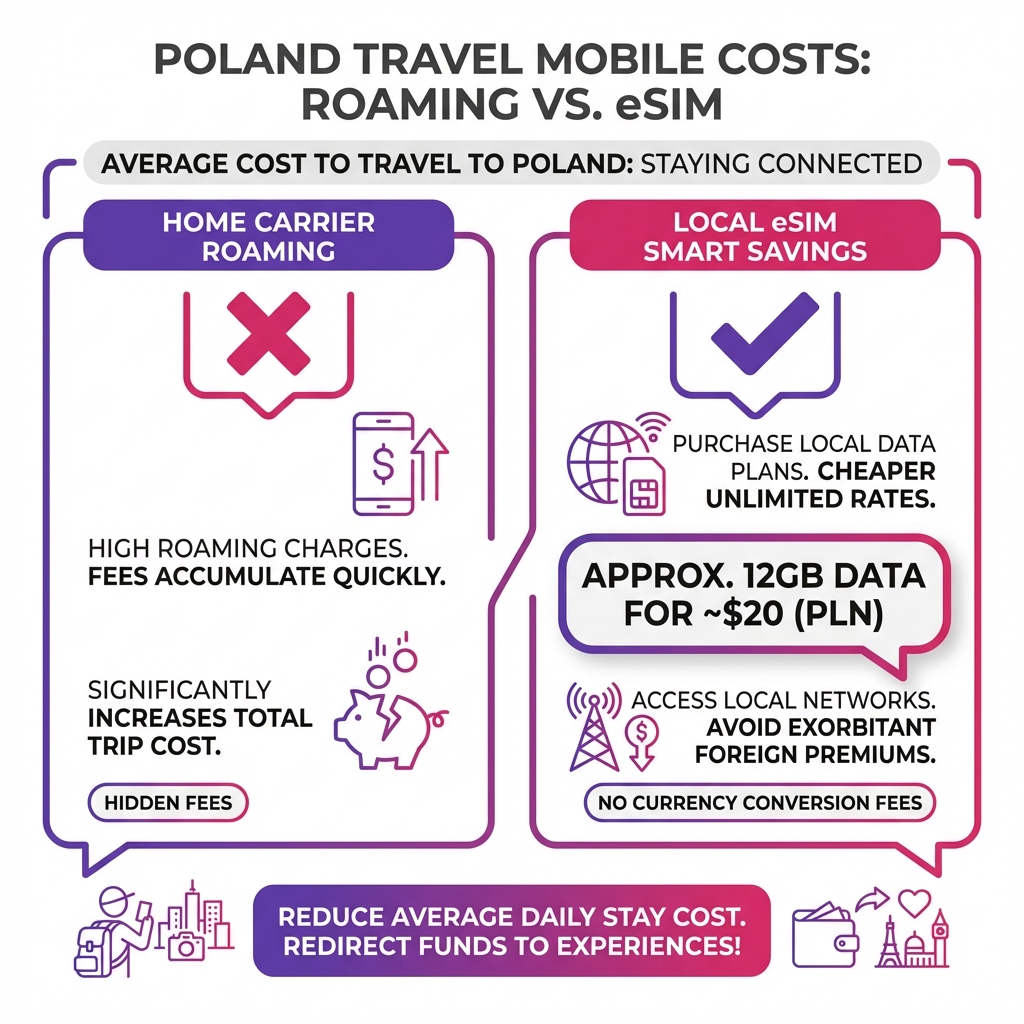
Don't let roaming charges ruin your budget. International roaming charges from home carriers often accumulate quickly, significantly increasing the total trip cost. Using eSIM cards is a cheaper way to stay online, allowing travelers to access local networks without the exorbitant fees associated with traditional roaming.
An eSIM allows you to purchase data plans at local rates, bypassing the high daily premiums charged by foreign providers. You'll save a lot of money compared to regular international data packages. Local mobile plans in Poland are affordable, with competitive offers providing approximately 12GB of data for around $20.
With these rates, staying connected for navigation, public transportation apps, and communication won't cost much. Paying for these services in local currency avoids currency conversion fees often hidden in roaming bills. This way, tourists reduce their average daily cost, directing funds toward experiences rather than administrative fees.
What is the cost of food and dining in Poland?
Dining in Poland is great value for money, with an average daily expenditure of approximately $30 (108 PLN) on meals. This average daily cost covers everything from self-service canteens to upscale gastronomy. Food expenses depend on the chosen travel style.
- Budget travelers often frequent milk bars to enjoy substantial meals at low prices.
- Mid-range budgets allow for daily visits to restaurants serving traditional pierogi and local dishes.
- Luxury travel involves higher spending at premium establishments in major cities.
You should always pay in the local currency (PLN) to get the best rate.
How much does it cost to eat at milk bars?
Dining at traditional milk bars, known locally as bary mleczne, is the most affordable way to experience authentic cuisine in Poland. A complete, hearty meal typically costs approximately 30 PLN ($7.50).
These government-subsidized cafeterias keep food expenses very low, with soups like tomato or sour rye costing between 5 and 8 PLN. Main courses, such as a serving of pierogi or a pork cutlet with potatoes, usually range from 15 to 22 PLN. Visitors in Warsaw and Krakow often eat here to maintain a strict budget while enjoying substantial portions of traditional food. Don't be intimidated by the Polish-only menus often found on the wall; pointing usually works fine.
What are the prices for restaurants and alcohol?
Regular restaurants charge higher rates than milk bars but remain affordable compared to Western European standards. A three-course meal for two people in a mid-range restaurant typically costs between 120 and 160 PLN ($30 to $40). Individual main dishes, such as gourmet pierogi or roasted duck, generally range from 35 to 60 PLN depending on the location.
Alcohol is also cheap. A 0.5-liter domestic beer usually costs between 10 and 15 PLN, while a shot of vodka averages 8 to 12 PLN. Establishments in tourist centers like Warsaw and Krakow may charge slightly more, particularly for imported spirits or craft beverages. Thanks to these prices, you can enjoy a full evening out without exceeding a mid-range budget.
How much do sightseeing and attractions cost?
Exploring Poland's rich cultural heritage is very cheap compared to Western Europe. You should budget an average of $10 (37 PLN) per person per day for activities and entrance tickets. That amount covers regular sightseeing fees for museums, historical landmarks, and organized tours.
While wandering through historic city centers is free, visiting iconic locations can add up:
- Wawel Castle
- The Wieliczka Salt Mine
- Auschwitz-Birkenau
The total cost depends on how many paid sites you visit in major cities.
What are the entrance fees for major sites like Auschwitz and the Salt Mines?
Entry to the grounds of Auschwitz-Birkenau is free, but you must reserve a time slot. Most visitors opt for a guided educator tour to fully understand the history, which costs approximately 90 to 100 PLN ($23 to $25). The Wieliczka Salt Mine is different, requiring a paid ticket that automatically includes a guide service. General admission for international tourists ranges from 120 to 135 PLN ($30 to $34) depending on the season.
Wawel Castle in Krakow charges separate sightseeing fees for specific exhibitions rather than a single general admission price. Tickets for major sections like the Royal State Rooms or the Crown Treasury typically cost between 30 and 50 PLN each. Budgeting for these specific landmarks is essential when calculating the total cost of a trip to Poland.
Are there free things to do in Poland?
Travelers can cut costs by enjoying numerous complimentary activities. "Free Walking Tours" operate daily in major tourist hubs like Warsaw, Krakow, Gdansk, and Wroclaw, which are tip-based. Exploring the UNESCO-listed Old Towns and admiring medieval architecture is completely free.
Plus, many state museums offer free admission on specific days of the week, so you can soak up the culture without impacting the budget. Public parks, such as Lazienki Park in Warsaw, have huge green areas and historic palaces accessible at no charge.
Do costs vary between Warsaw, Krakow, and other cities?
Prices vary a lot depending on where you go. Warsaw consistently ranks as the most expensive destination, particularly regarding accommodation costs and premium services. As the capital and primary business hub, it is more expensive for hotels and fine dining compared to the rest of the country. Krakow follows closely due to its immense popularity as a tourist center, where prices in the Old Town often mirror those in Western Europe.
On the other hand, major cities like Wroclaw and Gdansk generally offer slightly lower expenses for similar standards of living. Travelers venturing into smaller towns or rural regions find that food expenses and lodging drop substantially. A meal that costs 45 PLN in a Warsaw bistro might cost only 30 PLN in a provincial town. Factor this price difference in if you plan to spend several days in the capital.
How should you manage money and payments in Poland?
Poland uses the Polish zloty (PLN), meaning travelers must use this currency rather than the Euro for daily transactions. While the country is an EU member, the Euro is rarely accepted outside of specific tourist-heavy locations, and exchange rates in those instances are generally poor. To save money, avoid dynamic currency conversion fees by always choosing to pay in PLN at card terminals.
Do you need cash 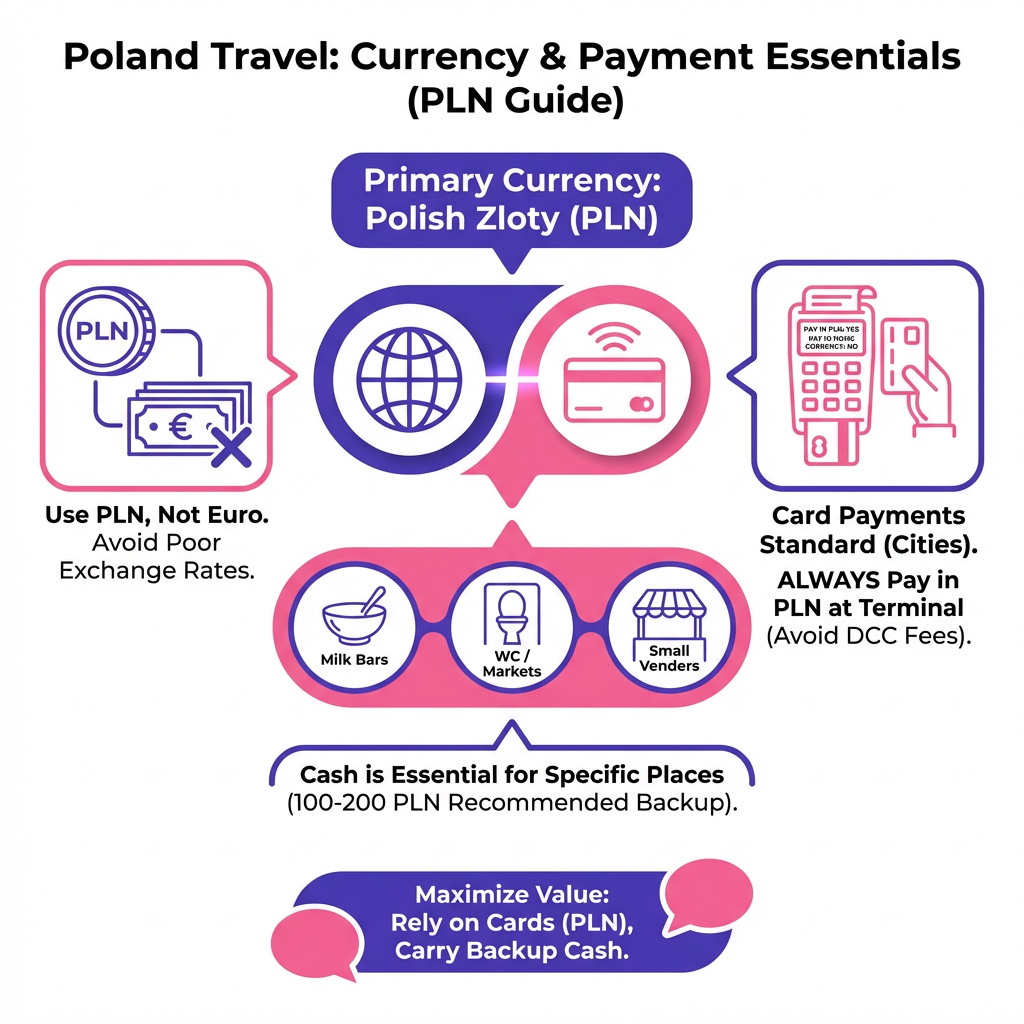 or can you pay by card?
You can use cards almost everywhere in Poland, and electronic payments are standard. Travelers visiting major cities like Warsaw and Krakow find that credit and debit cards work for nearly all transactions, from settling food expenses in restaurants to purchasing tickets for public transportation. Most places use contactless technology, allowing for quick payments at grocery stores, museums, and cafes. Most terminals offer the option to pay directly in PLN, which avoids unfavorable currency conversion rates applied by foreign banks.
Even so, carrying a small amount of physical cash remains essential. Traditional milk bars often are cash-only, requiring physical currency for service. Small conveniences such as public toilets and local marketplaces frequently lack card terminals. I learned this the hard way while trying to buy souvenirs at a small stall in Zakopane. Keep about 100 to 200 PLN in your wallet for small purchases; this ensures you won't get stuck if a card terminal is down. This way, you won't get stuck regardless of the vendor's technological capabilities.
What is the tipping culture in Poland?
Tipping in Poland is not required, though it serves as a polite gesture for quality service. People usually leave a gratuity of 10% of the total bill when the experience meets expectations. For instance, adding 15 PLN to a 150 PLN check is common practice.
Even if you pay for the meal by card, servers generally prefer receiving tips in cash to ensure they receive the full amount immediately. Travelers on a mid-range budget usually factor this small addition into their daily spending without significantly impacting the total trip cost. Rounding up the fare to the nearest whole number is common for taxi drivers and hotel staff.
Sources