

How much does it cost to go to Iceland?
An average Iceland travel budget ranges from $100 to over $250 USD per person daily. The total cost of your vacation depends heavily on your travel style and the season. Your biggest expenses will usually be:
- Airfare
- Accommodation
- Food expenses
- Transportation
Your choices make a huge difference in what you'll spend, depending on whether you book luxury hotels or budget-friendly hostels. Prices swing wildly depending on the season, with distinct price variations across peak, shoulder, and winter months. At a minimum, you'll need to budget for a car, food, and a place to sleep.
Iceland travel cost breakdown
| Expense category | Estimated cost (USD) | Key details & saving tips |
|
Overall daily budget |
$100 – $250+ per person |
|
|
Flights |
$300 – $1,200 |
Average cost for a round-trip international flight. Booking 3 to 6 months in advance secures better rates. |
|
Accommodation |
$40 – $250+ per night |
|
|
Transportation |
$70+ per day |
|
|
Food & drinks |
$30 – $100+ per day |
|
|
Activities & sightseeing |
Varies by activity |
|
|
Mobile connectivity |
Single low upfront cost |
Using an eSIM saves over $100 on a standard 10-day vacation by avoiding $10+ daily roaming fees. |
How does the time of year affect Iceland travel costs?
The month you choose to visit can make or break your budget for airfare, accommodation, and car rentals.
What are the prices during peak season?
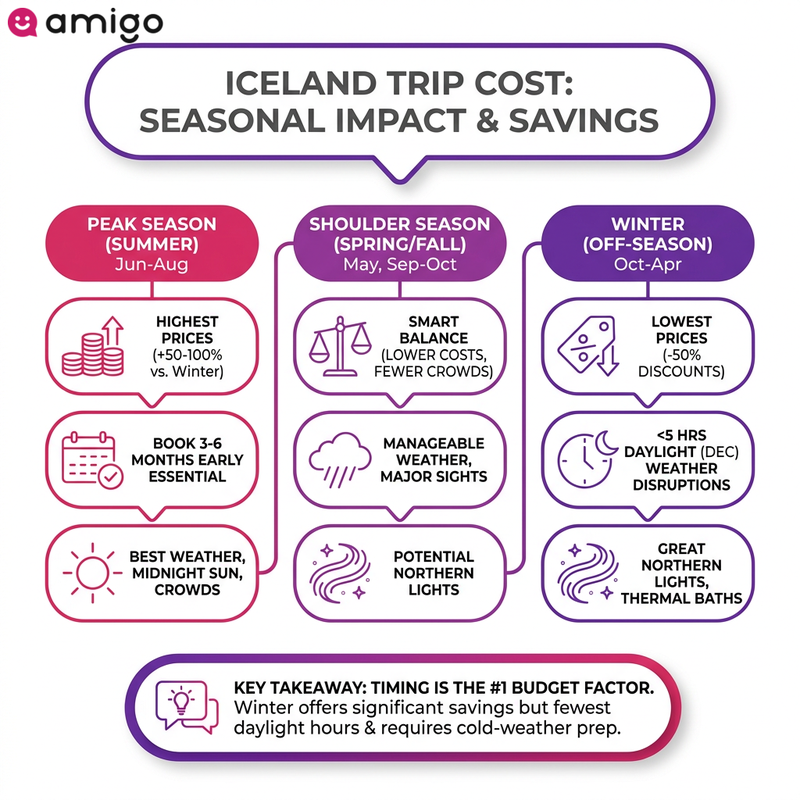
Peak season in Iceland runs from June through August. Expect to pay top dollar during these months because everyone wants to enjoy the great weather. Summer travel is significantly more expensive, with overall trip costs often increasing by 50% to 100% compared to winter rates. These summer markups will quickly eat into your budget, pushing daily rates for accommodation, airfare, and car rentals to their annual peak.
High demand makes booking 3 to 6 months in advance essential to secure better rates. Navigating the Ring Road and accessing popular sightseeing locations is a breeze during these warmer months. You'll have the chance to explore major national parks, such as Thingvellir and Vatnajökull, under the midnight sun.
How do shoulder seasons impact your budget?
Traveling during the shoulder seasons is one of the best ways to save money. Take it from someone who has shivered through a few July rainstorms: the weather is unpredictable year-round, so you might as well save some cash. The months of May, June, September, and October provide an ideal balance of lower prices, manageable weather, and fewer crowds.
This timing allows you to explore major attractions like waterfalls and glacier lagoons without the premium costs of summer. Spotting the northern lights also is a real possibility if you arrive in early fall.
What are the costs of winter travel?
Winter travel provides the lowest prices for flights and hotels, though it comes with limited daylight and potential weather disruptions. Tourists experience fewer than 5 hours of sunlight per day in December. However, visiting Iceland between October and April reduces overall trip costs by up to 50% compared to peak summer rates. You'll see massive discounts on flights, hotels, and rental cars.
You can easily stretch your budget further if you don't mind bundling up against the cold. Unique winter attractions, such as viewing the northern lights and relaxing in outdoor thermal baths, make braving the cold completely worth it.
How do you pay for expenses in Iceland?
The official currency of the country is the Icelandic Krona (ISK). However, Iceland operates as a largely cashless society where almost everyone pays with a card or phone.
What is the Icelandic Krona (ISK)?
The local currency in Iceland is exclusively the Icelandic Krona, officially abbreviated as ISK. Exchange rates for the Krona fluctuate daily based on global financial markets. You'll see everything from your morning coffee to your rental car priced in ISK. This exchange rate will mostly affect your three biggest costs: accommodation, car rentals, and daily food expenses.
Fluctuating exchange rates between the ISK and foreign currencies directly influence total trip costs. Keep an eye on the exchange rate before you leave. Tracking the ISK against your home currency is the best way to avoid nasty surprises when paying for gas or daily meals.
Should you use cash or credit card payments?
You might be tempted to exchange a large stack of bills before your trip, but hold off on that. Shops and restaurants prefer and accept credit card payments almost everywhere in Iceland, making physical cash largely unnecessary. Cashiers process transactions at local stores in the Icelandic Krona (ISK), though they highly favor plastic in this cashless society. Using banking products with 0 foreign transaction fees will save you a lot of money on daily swipes.
You can use your card or phone for almost everything, from groceries to hotels, car rentals, and fuel. However, paying for specific services, like automated fuel purchases, requires a physical card with a four-digit PIN.
How much do flights to Iceland cost?
The average cost of a round-trip international flight to Iceland ranges from $300 to $1,200. Flights will be one of your biggest upfront costs that fluctuates heavily based on your departure location and chosen season. Reserving tickets during peak season commands the highest prices. On the other hand, flying during shoulder seasons or opting for winter travel significantly reduces these initial trip costs.
To get the best deal, try to book your tickets 3 to 6 months out and select off-peak departure times. Once you land at Keflavik Airport, you can easily hop on the Flybus to get to Reykjavik.
What are the accommodation costs in Iceland?
Where you sleep will take up a big chunk of your daily budget. Lodging options range widely from budget facilities to luxury properties. Expect to spend anywhere from $40 to over $250 a night depending on the chosen lodging category. Five primary types of overnight stays are available across the country:
- Hotels
- Guesthouses
- Hostels
- Camping sites
- Campervan rentals
Seasonal demand completely changes these nightly rates throughout the year. It's much easier to find cheap rooms if you visit in the winter. Reserving rooms during peak season will cost you a premium because places book up fast.
How much do hotels, hostels, and guesthouses cost?
Hostels are hands-down the most budget-friendly place to sleep in Iceland. Basic dorm beds cost approximately $40 to $60 per night. Standard hotels often cost more than $200 a night during peak season in popular areas like Reykjavik and along the Ring Road.
Guesthouses offer a great middle-ground budget option. You can save a lot of money by booking a room with a shared bathroom. Opting for guesthouses with shared bathrooms is a great trick for mid-range travelers aiming to stay within a $150 to $200 daily travel budget.
Does the Iceland camping card save money?
The Iceland Camping Card offers substantial savings for travelers planning to camp extensively. You pay one flat fee upfront, and it covers your nightly stays across participating sites. Using this card provides a budget-friendly alternative to traditional accommodations like hotels and guesthouses. It pays for itself quickly if you rent a campervan for multiple weeks.
The pass covers your campsite fees for a set number of nights, which can save you a ton of cash compared to paying as you go. While the pass is a great money-saver, keep two things in mind:
- Restricted seasonal availability during winter
- Exclusion from specific grounds near major national parks along the Ring Road
How much does transportation cost in Iceland?
Getting around Iceland is a major budget factor, whether you choose to rent a vehicle or use public transport. If you're driving, you'll need to keep a close eye on gas prices. Factoring these combined transit fees into your daily travel budget keeps your daily expenses manageable.
What is the cost of renting a car or 4x4 vehicle?
Base rates for a standard 2WD car rental begin at $70 per day, but specialized 4x4 vehicles cost a lot more. Standard cars are highly cost-effective for navigating fully paved routes like the main Ring Road. On the flip side, renting larger 4x4 vehicles increases overall trip costs drastically during peak season. Visitors frequently ask whether an upgraded vehicle is strictly necessary. You don't require a 4x4 for basic self-drive tours along the coast.
However, you legally have to drive a 4x4 if you plan to access unpaved mountain routes, such as the rugged F-roads in the highlands. Choosing between these vehicle types directly impacts your daily spending. Heavier 4x4 vehicles burn through gas much faster, which will drive up your daily costs. Securing lower rental rates for these vehicles is much easier during winter travel.
How much does a campervan rental cost?
Renting a campervan is cheaper than booking a separate car rental and traditional accommodation. A campervan knocks out your two biggest expenses at once: transportation and lodging. By sleeping where you drive, you instantly free up a massive chunk of your daily budget.
You'll need a 4x4 campervan if you access unpaved routes like the highland F-roads. Securing overnight camping along the Ring Road is a great way to save money if you use the Iceland Camping Card.
What are the current gas prices and fuel costs?
Fuel is exceptionally expensive in Iceland compared to other countries, so you need to plan for it. Current gas prices range from $2.20 to $2.40 per litre for gasoline and diesel. A standard daily fuel budget averages $40 to $60 for self-drive tours along the Ring Road.
To figure out your gas budget, map out your daily driving distances, especially if you operate a heavier 4x4 vehicle or a large campervan. High fuel costs might make you think twice about renting a massive SUV.
How much is the Flybus from Keflavik airport?
The Flybus is the cheapest way to get from Keflavik Airport to Reykjavik. This frequent shuttle service is super convenient with scheduled departures after every arriving flight. Choosing the Flybus over private taxis saves travelers nearly $100, keeping more money in your pocket from day one.
Using these budget-saving strategies saves your cash for other major Iceland expenses like airfare, accommodation, and sightseeing.
How much do food and drinks cost in Iceland?
A daily food budget in Iceland ranges from $30 to over $100 per person. Restaurant meals come with a steep price tag, making food one of the easiest ways to accidentally overspend. However, buying meals at grocery stores is the most effective way to control your daily spending. Purchasing groceries at a supermarket will cut your food bills in half if you prepare homemade meals.
What are the prices at grocery stores like Bónus and Krónan?
Locals and tourists know Bónus and Krónan as the cheapest grocery stores in Iceland. As a quick pro-tip, look for the giant pink pig logo of Bónus—it will become your best friend on a budget trip. Stocking up at these budget supermarkets is the best way to keep your food costs down for anyone traveling on a budget.
You'll easily find these bright, budget-friendly stores in Reykjavik and scattered throughout the larger towns along the Ring Road.
How much do restaurant meals and Icelandic hot dogs cost?
The cheapest food to eat in Iceland is the traditional Icelandic hot dog. I have to admit, I ended up eating more of these than I originally planned, and my wallet thanked me for it. While sit-down restaurants are notoriously pricey, these hot dogs are a cheap and classic local favorite. You can find them at street stands in Reykjavik and rural gas stations. Meanwhile, a standard restaurant meal averages $15 to $50 per plate, which adds up incredibly fast.
Grabbing a hot dog while you fill up the gas tank is a classic, budget-friendly Icelandic tradition—just tap your card to pay in ISK and get back on the road.
How can you save on alcohol prices at Vinbudin and happy hours?
Drinking on a budget in Iceland is totally possible if you purchase beverages at the airport duty-free shop and use daily promotions at local bars. The state-run liquor store system, known as Vinbudin, controls all retail alcohol sales across the country. These establishments charge notoriously high rates due to heavy domestic taxes. Buying imported and local beverages at the Keflavik Airport duty-free shop upon arrival is significantly cheaper than purchasing them at a standard Vinbudin location.
Seeking out discounted afternoon drinks is another great way to save. Two primary venues offer these daily happy hours: local pubs in Reykjavik and bars inside standard restaurants. Taking advantage of these specific timeframes keeps your dinner bill from skyrocketing when ordering drinks alongside typical meals.
How much are thermal baths like the Blue Lagoon and Sky Lagoon?
Premium geothermal spas are popular bucket-list experiences that come with a hefty price tag. Thermal bath tickets typically cost between $35 and $148 depending on the facility's popularity. A basic ticket to the Blue Lagoon costs approximately $60 to $148. Meanwhile, the Sky Lagoon near Reykjavik charges $50 to $100 for oceanfront bathing.
Prices vary strictly based on the luxury level and chosen package, such as standard admission versus premium spa rituals. Allocating funds for these destinations will quickly drain your budget during peak season. Visiting smaller municipal pools is a fantastic way to save money for tourists seeking cheaper alternatives.
What do glacier hiking and whale watching tours cost?
Glacier hiking and whale watching are premium sightseeing activities that aren't cheap. Glacier hiking tours are expensive, with average prices ranging from $100 to $170 per person. Whale watching excursions cost about the same of $80 to $120 per ticket. Booking professional guides is absolutely necessary for your safety for navigating these hazardous environments.
Your guides will give you all the gear you need for these excursions, such as ice axes for glaciers and thermal marine suits for ocean winds. Booking these guided adventures during the summer peak will quickly eat into your budget. If these experiences are on your bucket list, look for bundled activity packages or winter discounts to soften the blow.
Which national parks and Ring Road attractions are free?
Exploring Iceland's natural landscapes is largely free, helping to balance out other high travel costs. Tourists don't pay an entrance fee to enter major national parks. Most natural attractions along the Ring Road, including stunning waterfalls, deep canyons, and black sand beaches, are completely free to visit.
Visiting these locations without admission charges helps keep your daily spending down for self-drive tours. While entry remains free, you might have to pay minor parking fees at specific popular sites. Drivers should factor these small charges into their daily travel budget.
Why should travelers use an eSIM card in Iceland?
We highly recommend getting an eSIM if you need reliable internet for your trip. An eSIM card is the easiest and cheapest way to stay connected for navigation and safety without physical SIMs or high roaming fees. Digital connectivity offers 2 primary benefits for self-drive tours: live GPS routing along the Ring Road and instant access to severe weather alerts. For seamless mobile access, grabbing a dedicated eSIM card for Iceland means you'll have internet the second you land.
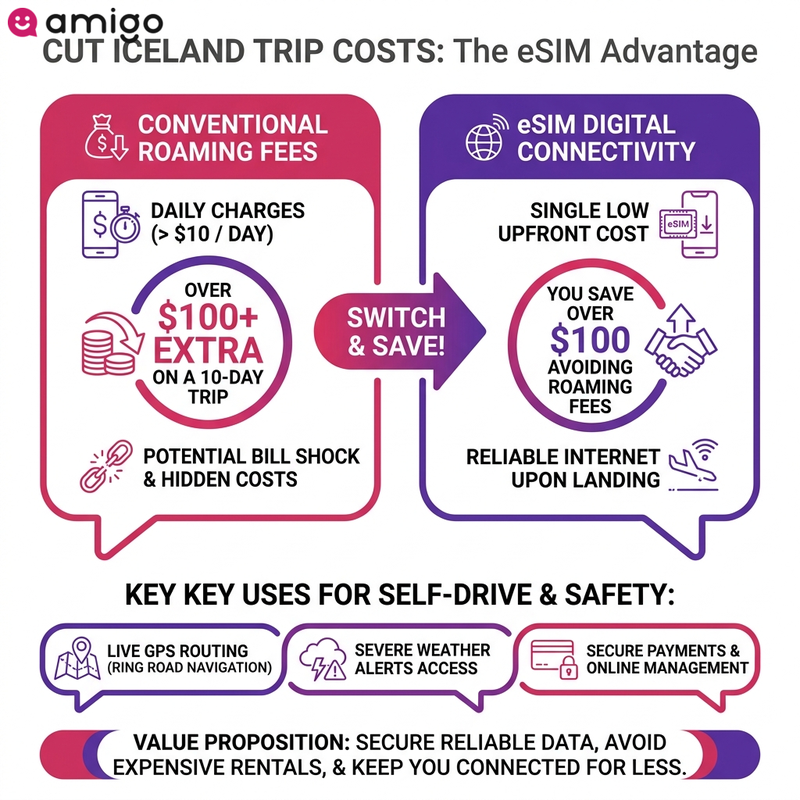
Instead of swapping tiny plastic chips at the airport, you can just download a plan. This keeps you from getting hit with massive roaming charges. Plus, having reliable data means you can easily use your phone for GPS instead of renting an expensive unit from your rental car agency. It also supports essential daily tasks, such as processing credit card payments in Reykjavik and managing travel insurance policies online. Securing this technology saves you money.
How do eSIM cards reduce communication costs?
eSIM cards prevent excessive roaming fees from inflating your budget while keeping you connected in Iceland. Standard carrier roaming charges frequently exceed $10 daily, whereas a digital data plan requires a single low upfront cost. Tourists save over $100 on a standard 10-day vacation by avoiding daily home provider fees.
Cheap mobile data means you won't lose your GPS connection during self-drive tours along the Ring Road without incurring per-megabyte international data charges. Travelers can spend that saved money on better things, like a nicer hotel or a great meal.
Does travel insurance add to your Iceland trip budget?
While travel insurance isn't legally mandatory for entering Iceland, this coverage acts as a necessary protective expense to handle unexpected emergencies. The country is known for its unpredictable weather, making comprehensive protection a lifesaver if things go wrong. Securing a policy protects you from severe financial losses if you encounter specific travel disruptions like medical emergencies, trip cancellations, or severe vehicle accidents.
Budgeting for travel insurance is an essential upfront expense for self-drive tours, especially since navigating icy roads can be dangerous during winter travel. Drivers are on the hook for a lot of money if something happens whether operating a standard car, a larger campervan, or a specialized 4x4 vehicle. Purchasing this protection in advance helps you avoid paying out-of-pocket for costly medical evacuations or vehicular damages.
How can you reduce your overall travel budget in Iceland?
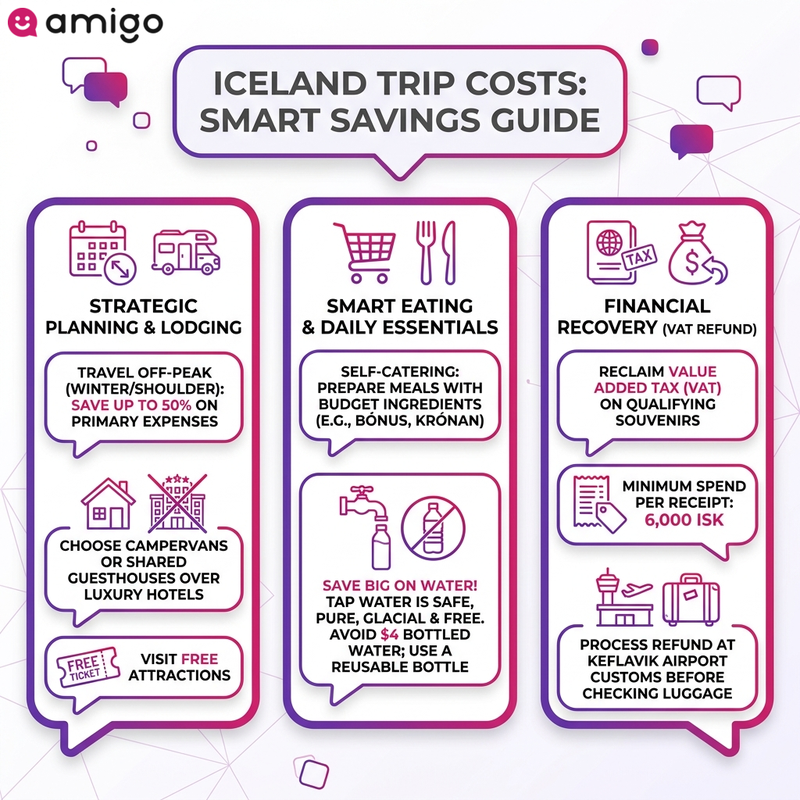
Making smart choices like self-catering, traveling off-peak, and visiting free attractions significantly lowers your total travel budget. Choosing a campervan or shared guesthouses over luxury hotels will save you a fortune. Scheduling a vacation during winter or shoulder seasons cuts primary expenses by up to 50 percent compared to peak summer rates.
Purchasing ingredients at budget grocery stores like Bónus and Krónan keeps your food costs low if you prepare your own meals.
Can you drink the tap water in Iceland?
Please, whatever you do, do not be the tourist buying flats of bottled water at the supermarket! Drinking tap water in Iceland is perfectly safe, pure, and free, as it comes directly from glacial springs. The country makes it easy to fill up at public fountains in Reykjavik and rural taps along the Ring Road.
Using a reusable bottle is a great way to protect your planned travel budget. This strategy saves you from spending $4 on a bottle of water at local grocery stores. Eliminating these daily drink purchases keeps your daily spending down, especially if you participate in outdoor activities like hiking and camping.
How do VAT refunds work for tourists?
Tourists can reclaim Value Added Tax (VAT) on qualifying purchases before leaving Iceland. Getting your tax back on souvenirs is one of the best ways to lower overall trip costs. You qualify for this refund if you buy an eligible physical good, such as a local souvenir. The minimum spend is 6,000 Icelandic Krona (ISK) per receipt.
You get a refund by presenting a tax-free form at the Keflavik Airport customs desk before checking your luggage. They'll put the money right back on your card. This is a nice way to recoup some cash after shopping in major commercial areas like Reykjavik.
How much money do I need to travel to Iceland per day?
A realistic daily travel budget in Iceland ranges from $100 for extreme budget travelers to over $250 for standard comfort. To figure out your daily number, look at three main things: accommodation, daily food expenses, and transportation. Different travel styles will completely change what you spend.
You can scrape by on $100 a day if you use specific strategies like booking hostel beds, preparing homemade meals, and sharing transit costs.
On the other hand, a luxury travel style easily exceeds $250 daily. If you want more comfort, you'll be paying for things like private hotel rooms, restaurant dining, and a specialized 4x4 car rental. Drivers also face additional daily fees based on fluctuating fuel rates and current gas prices.
Factoring in paid sightseeing will push these numbers even higher. Managing these diverse expenses is much easier if you process local transactions in the Icelandic Krona.
Sources
- https://www.globalpetrolprices.com/Iceland/gasoline_prices/
- https://www.vinbudin.is/english/home/home-um_atvr/https-www-vinbudin-is-english-home-um_atvr/tabid-2368/brief-history-of-%C3%A1tvr
- https://island.is/en/tax-free-shopping-in-iceland