

Is Latvia expensive to visit?
Latvia is a moderately priced European destination that gives you a lot of bang for your buck. You'll find prices here are much lower than in Scandinavia or Western Europe, though a bit higher than in some other Eastern European spots. Expect to spend about the same as you would in Cyprus or Malta.
Independent data backs this up: in the Post Office Travel Money City Costs Barometer 2025, Riga ranked as the cheapest of 38 European cities compared, with a standard city-break basket (two hotel nights, dinner, transport, and museum entry) totaling €297 — well below Vilnius (€299), Tallinn (€395), or Amsterdam (€685).
What you spend really comes down to where you sleep and eat. Plus, since Latvia uses the Euro, it's easy to keep track of exactly what you're spending without doing mental math.
How much does it cost to go to Latvia?
Costs vary significantly between budget travelers opting for hostels and those seeking luxury experiences in upscale hotels. Couples can save money by splitting rooms.
What is the average daily budget for travelers?
Based on the accommodation, food, and transport prices in this guide, the average daily cost for a visitor in Latvia is approximately $156 (€134). This blended figure reflects a standard mix of mid-range choices rather than a strict sum of any single accommodation, food, or transport option below — travelers who pick a pricier hotel and skip self-catering will land above it, while those who mix hostels with the Central Market will land below it. If you're on a budget, you can slash that to around $62 per day by choosing hostels and self-catering options.
This average is typical for a standard vacation style. If you want luxury—think premium hotels and fine dining—expect to pay over $383 per day.
How much money do you need for a one-week trip?
Applying that same daily estimate across a week, a solo traveler should plan on spending about $1,093. This covers your hotel, food, and getting around. Couples are looking at roughly double that—around $2,186.
These figures apply primarily to mid-range travelers. Staying in Riga's hostels can significantly lower these costs.
What are the flight costs to Riga International Airport?
Travelers flying from the United States typically pay an average of $1,079 for round-trip tickets to Riga, based on fare data gathered for this guide in mid-2026. Riga International Airport is the primary entry point for most visitors, and airfare is often the biggest single hit to your wallet.
Booking separate one-way tickets on different airlines—often called mix-and-match fares—can sometimes save you a bundle compared to standard round-trips.
When is the cheapest time to fly to Latvia?
February is the most affordable month for air travel to Latvia. It's a huge difference compared to the pricey summer months. Just make sure you pack heavy layers, because the savings come with a serious chill.
You can snag the best deals by booking tickets 2 to 6 weeks before departure. Booking within this window can save you about 12%. If you can be flexible with your dates, you'll stretch your budget even further.
What are the accommodation prices in Latvia?
Riga offers the widest range of accommodation in the country, from cheap hostels to fancy hotels, keeping overall prices reasonable compared to Western European destinations. Costs fluctuate based on the season and city; summer months see prices spike significantly due to increased tourism. Lodging in Riga generally costs more than staying in smaller towns or rural regions, and will likely be your biggest expense.
How much do hostels and budget hotels cost?
Low prices throughout Latvia make it a haven for those on a tight budget. Hostels and budget guesthouses are much cheaper compared to the standard $117 hotel average. Hostel prices in Riga frequently start as low as $16 per night for a dormitory bed. In my experience, the standard of cleanliness here is often higher than you'd expect for the price. Private rooms in budget hotels generally range between $30 and $50.
This makes it easy to explore the capital without breaking the bank.
What are the rates for mid-range and luxury hotels?
Standard double rooms usually average around $117 per night. For that price, you can generally expect 3-star or 4-star accommodation with modern amenities and convenient locations.
Luxury travel in Latvia costs significantly more for 5-star properties known for exceptional service. Top-tier spots like the Grand Hotel Kempinski Riga come with a much higher price tag, but offer 5-star luxury to match. To enjoy these upscale spots, you'll need a budget of around $383 per day. In Riga, paying those higher rates usually buys you better comfort and a location right next to the main sights.
How much does local transportation cost?
Getting around Latvia is cheap and surprisingly reliable. Your daily transport costs will cover buses, trams, trains, and the occasional taxi. Public transit in Riga is key to keeping costs down while ensuring easy access to major attractions.
Intercity train travel is a reliable and cheap way to get between the capital and surrounding regions. Taking the train is much cheaper than renting a car.
What is the price of public transit and trains?
Public transit is the cheapest way for navigating Riga and connecting to surrounding towns. According to Live Riga, a single 90-minute ticket for buses, trams, and trolleybuses costs €1.50, with day and multi-day options making longer stays cheaper still.
For longer stays, period passes beat buying single tickets: a 24-hour pass runs €5, a three-day pass €8, a five-day pass €10, and a one-month pass €30 — worthwhile once you're taking three or more rides a day.
Train travel through Latvian Railways is a cheaper alternative to car rentals for visiting regional destinations such as Sigulda and Cesis. Fares for these intercity routes are reasonably priced, often costing only a few euros per trip. You can explore most of Latvia by train without spending a fortune.
How much is car rental in Latvia?
While renting a car offers the freedom to explore rural regions like Sigulda and Cesis, it generally costs more than public transportation: expect to pay roughly €15 to €70 per day depending on the vehicle model, insurance, and season. Prices fluctuate based on the season and the specific vehicle model chosen.
Manual transmissions are standard and cheaper, while automatics typically incur a surcharge. Drivers also face additional costs for fuel and mandatory equipment such as child safety seats.
What is the food budget for Latvian cuisine?
While accommodation is cheap, dining out in Riga can surprisingly rival Western European prices if you aren't careful. Latvian cuisine is recognized for being hearty and filling, giving you a lot for your money. Culinary staples include dark rye bread, pork dishes, and potatoes prepared in various styles. The final bill depends on the frequency of dining out versus self-catering, with restaurants in Riga generally charging higher prices than eateries in smaller towns.
How much does dining out cost in Riga?
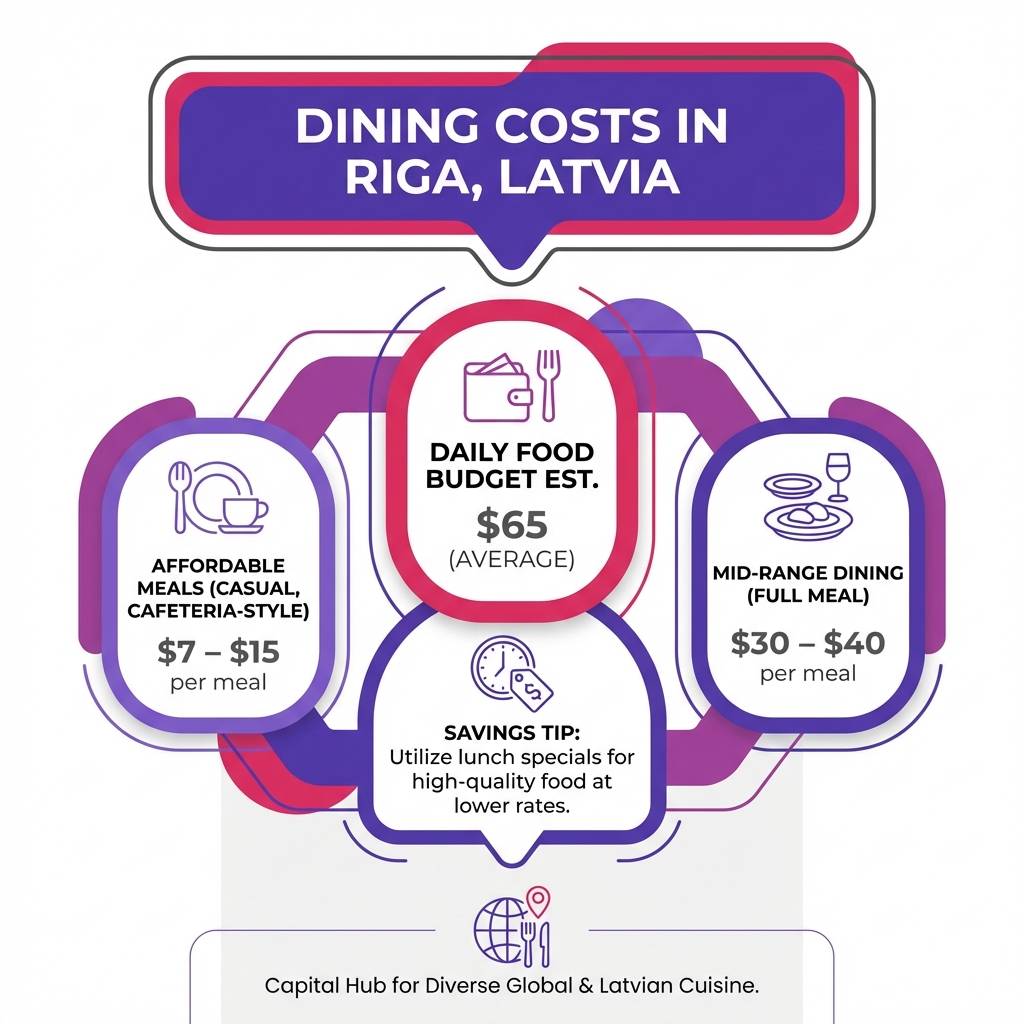
Riga surprises budget-conscious diners with choices that typically fit within the average $65 daily food budget. The capital is a hub for foodies, featuring everything from inexpensive local eateries to sophisticated restaurants.
- Affordable meals at casual spots or cafeteria-style venues like Lido generally range from $7 to $15.
- Mid-range dining experiences usually cost between $30 and $40 for a full meal.
- High-end establishments serving gourmet Latvian cuisine command higher prices that exceed standard averages.
Visitors often take advantage of lunch specials to enjoy high-quality food at lower rates.
What are the costs of groceries and Central Market visits?
Purchasing groceries at local vendors is a great way to trim daily food costs. The Riga Central Market is the largest market and bazaar in Europe. It's not just a top sight to see—it's also a great place to buy food. Pro tip: grab some smoked fish and fresh dill here for an unforgettable picnic.
You'll find affordable prices for fresh produce, dairy, and meat products. Local specialties such as smoked fish, dark rye bread, and artisanal cheeses cost a fraction of restaurant prices. Sampling authentic Latvian cuisine here avoids the extra service fees common in sit-down establishments. A grocery run for basic supplies typically costs between $15 and $25, covering several days of breakfasts and snacks.
How much do sightseeing and activities cost?
Sightseeing costs in Latvia are remarkably affordable compared to Western European standards. This portion of the travel budget covers admission to museums, historical landmarks, and various cultural events. Many significant attractions require no payment at all, which saves you money.
Paid experiences generally don't cost much, while free walking tours in Riga help tourists minimize daily spending while learning about local history. The final expense really depends on how many paid tours you do versus free nature hikes.
What are the entrance fees for museums and castles?
Entrance tickets to historical sites and museums in Latvia are generally modest. Prices for most museums in Riga typically range from $3 to $8 (€3-€7). This means sightseeing won't eat up much of your budget.
The Cesis Castle complex charges approximately $7 (€6) for admission. Visitors exploring Cesis receive lanterns to navigate the medieval tower ruins, making the experience even more atmospheric. Walking the dark stone corridors by candlelight was honestly a highlight of my trip. Historical sites in Sigulda, such as the Turaida Museum Reserve, have similar fees averaging $7. You can visit several sites without going over budget.
Is it expensive to visit Gauja National Park, Cesis, and Sigulda?
Visiting the region surrounding Gauja National Park is a very cheap experience. Train travel is the cheapest way to reach these destinations, with tickets from Riga to Sigulda or Cesis typically costing between $2 and $5 (€2-€4) one way. Nature enthusiasts enjoy substantial savings as hiking trails and scenic viewpoints within the park are completely free to access.
Sightseeing costs remain low even when including paid landmarks, such as the medieval Cesis Castle, which charges a modest entrance fee. A standard day trip to this area generally costs between $20 and $35 per person, covering round-trip transportation, admission tickets, and a casual meal. This affordability makes exploring the "Switzerland of Latvia" well worth the detour.
What does nightlife cost in Riga?
Riga is known as a vibrant party destination that remains reasonably priced. Travelers usually spend an average of $22 (€19) per day specifically for alcohol and nightlife expenses. This amount covers entrance fees to clubs and several drinks at popular bars in the Old Town.
Alcohol prices in Latvia are generally lower than in Western Europe, though costs add up fast during a long night out. A pint of local beer often costs between $3 and $5, while cocktails range from $7 to $10. Just keep an eye on your tab—those cheap drinks can add up fast in such a fun atmosphere.
How to stay connected in Latvia with an eSIM?
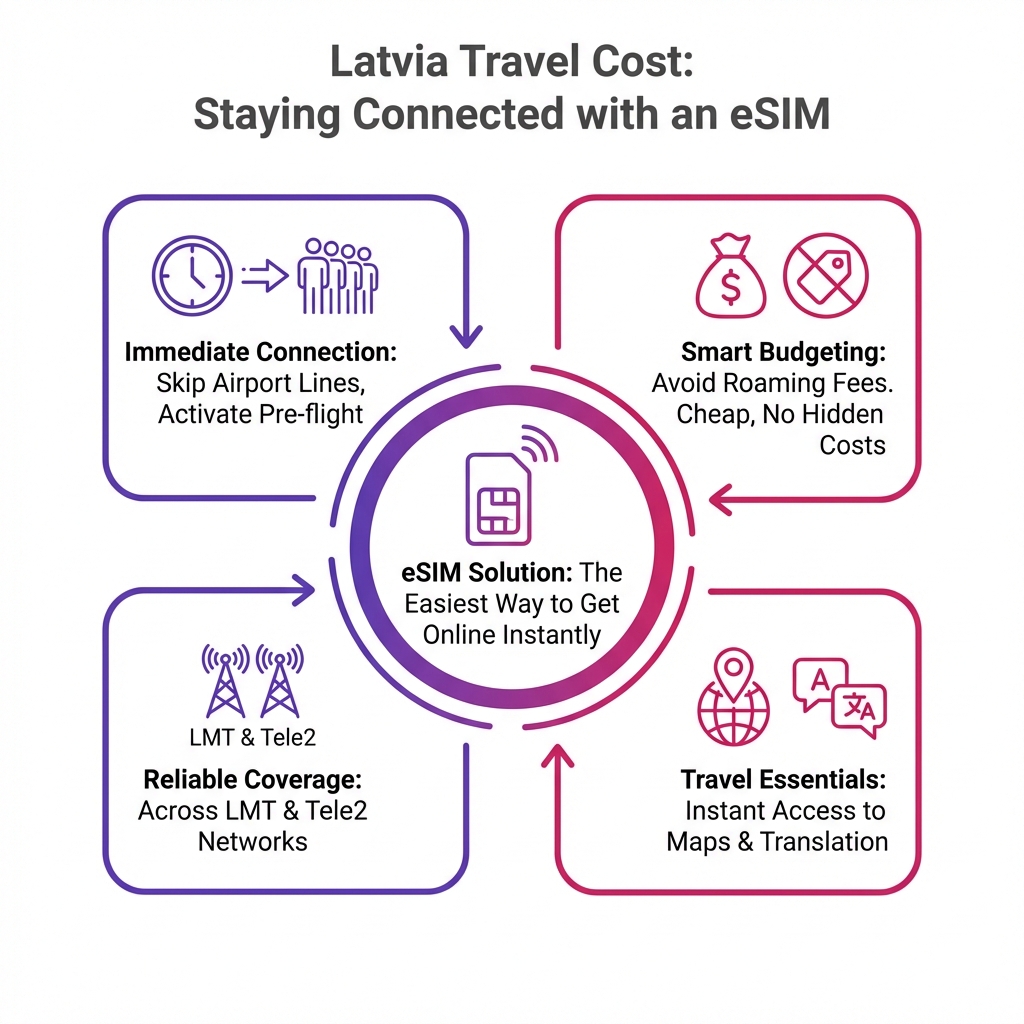
Staying connected while exploring Riga and the countryside is essential for modern travelers. The easiest way to get online is to grab an eSIM card. Skip the kiosk lines at Riga Airport by activating an eSIM before you fly. It ensures you have immediate access to maps and translation apps the moment you land, with reliable coverage across LMT and Tele2 networks.
Why should you use an eSIM for travel in Latvia?
Using an eSIM in Latvia connects you right away without the hassle of physically swapping plastic chips. Travelers activate mobile data plans for Latvia instantly upon arrival, eliminating the need to search for kiosks or register at airports. Going digital saves you money by avoiding expensive roaming fees from home carriers.
Budget travelers get reliable access to navigation, translation apps, and ride-sharing services without hidden costs. eSIM cards offer an easy and cheap way to stay online.
What other expenses should you consider?
Don't forget to budget for the little things, not just flights and hotels. Hidden expenses often affect the total cost of travel to Latvia.
- Tipping is customary in Riga, with 10% being the standard for good service in restaurants.
- Souvenirs, such as Baltic amber or Riga Black Balsam, typically cost between $10 and $50 depending on quality.
- Bathroom fees in public places usually range from €0.30 to €0.50.
Setting aside a 10% buffer covers these unexpected incidental fees. Travel insurance is a critical component of a secure trip, protecting against medical emergencies and flight cancellations. Including this expense in the average daily cost calculation keeps you safe if something goes wrong.
How much is travel insurance?
Buying travel insurance typically amounts to 4% to 10% of the total prepaid travel budget (based on quotes gathered for this guide in mid-2026). A basic policy for a one-week trip to Latvia generally costs between $30 and $60 per person. While basic policies are affordable, the final premium depends on the traveler's age, trip duration, and coverage limits.
Comprehensive plans that include theft protection and extreme sports coverage will cost more. Coverage is necessary for protecting against significant financial losses due to trip cancellations, flight interruptions, or lost luggage. Medical coverage is particularly vital for non-EU residents visiting Latvia, as it covers potential hospital bills and emergency evacuation. It's worth the cost to avoid a huge bill if an emergency happens.
How to manage money and currency in Latvia?
Latvia joined the Eurozone in 2014, making the Euro (€) the sole legal tender for all transactions. International visitors managing a travel budget will find the pricing easy to understand, as it eliminates the need for complex calculations against the former Lats. Electronic payments are the standard in Riga, where credit and debit cards (Visa and Mastercard) work in most hotels, restaurants, and shops. Cash remains essential for small purchases at street kiosks, rural guesthouses, or the bustling Central Market. I learned this the hard way when trying to buy a quick snack at a street stall.
You'll save money by avoiding those traditional currency exchange counters at the airport, which often charge high commissions. Withdrawing funds directly from local ATMs generally gets you the real rate. Specialized financial services like Wise allow tourists to hold multiple currencies and spend abroad with significantly lower conversion fees than standard bank cards. Always select the option to be charged in the local currency (EUR) at card terminals to avoid poor dynamic currency conversion rates.
How can you save money on your trip to Latvia?
Travelers can cut the cost of a trip to Latvia by strategically planning the timing of their visit. Choosing off-season travel, particularly during the late autumn or winter months, means much lower prices for accommodation and airfare compared to the expensive summer peak season. You can often save up to 40% on hotel rates simply by avoiding July and August. To save on flights, book at least a month ahead. Being flexible with dates helps too.
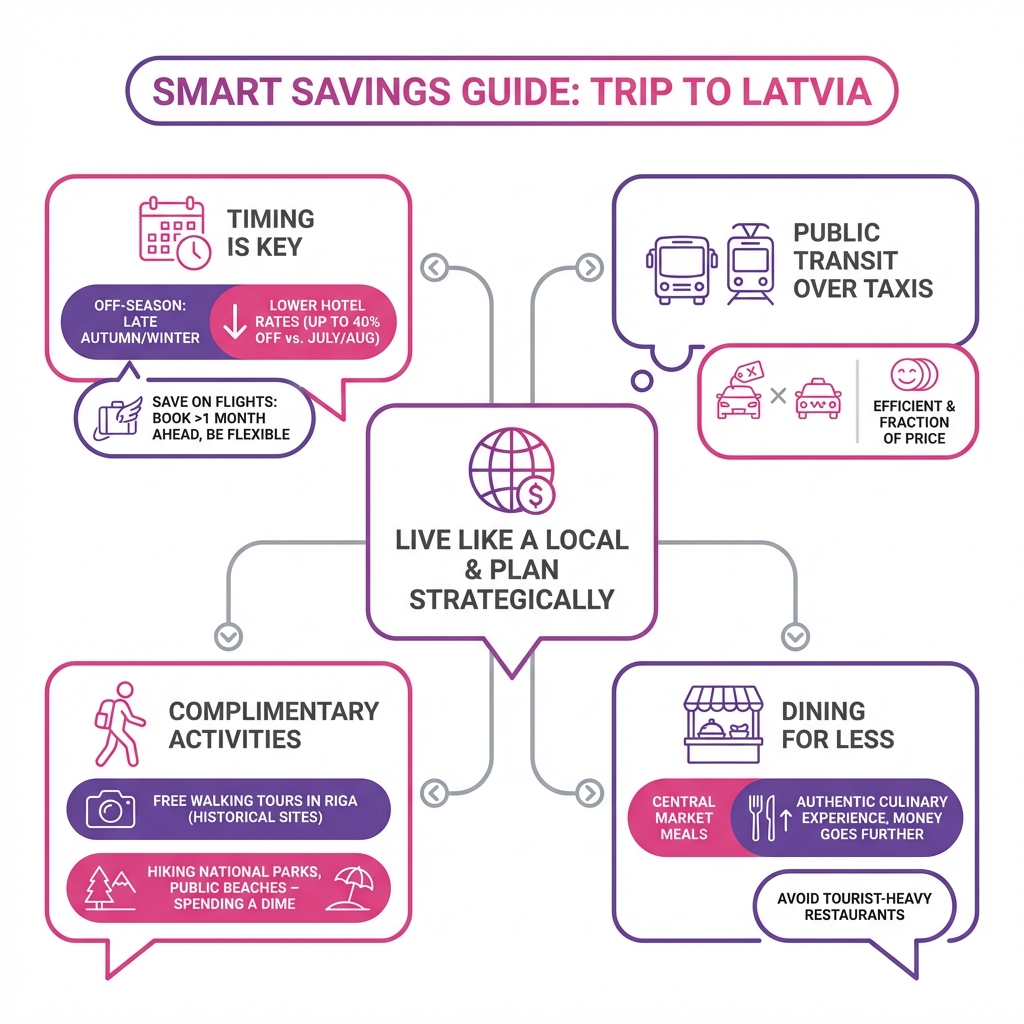
Living like a local is one of the best ways to keep costs down.
- Using public transit rather than taxis or rental cars saves you a ton, as buses and trams provide efficient connections for a fraction of the price.
- Visitors should take advantage of free walking tours in Riga to explore historical sites without paying for private guides.
- Plus, enjoying complimentary activities such as hiking in national parks or visiting public beaches lets you have a great time without spending a dime.
- Dining at the Central Market instead of tourist-heavy restaurants makes your money go further, allowing for an affordable yet authentic culinary experience.
Sources