

What is the average cost of a trip to Brazil?
A trip to Brazil costs approximately $92 (R$499) per day. While Brazil is generally affordable for international visitors, your final bill depends heavily on your travel style and dates. Your costs will go up or down depending on how much comfort you want.
For longer vacations, you'll need to figure out the total budget based on these daily averages. These estimates cover accommodation, food, and local transport to give you a realistic idea of current prices in Brazilian Real (BRL).
How does trip duration affect the total cost?
Think of it like a gym membership: the more you go, the cheaper each visit becomes. The flight is your initiation fee; spreading it over a month makes the daily hit much softer. Even though your total spend increases, the daily average often drops. A solo traveler can expect to spend $646 (R$3,493) for one week, while a two-week adventure costs about $1,293 (R$6,986).
Couples traveling for two weeks will likely need around $2,600 (approx. R$14,000). Extending the trip to a full month brings the cost to $2,770 (R$14,970) for singles and $5,541 (R$29,940) for pairs.
What are the main travel expenses for a Brazil trip?
Most of your Reais will go toward five big buckets:
- International flights
- Accommodation
- Local cuisine
- Transportation
- Sightseeing
These areas take up most of your budget. Your final costs in each category will depend on the current value of the Brazilian Real (BRL) and your personal preferences.
Flights and lodging carry the most weight: expect flights to eat up roughly 30-40% of your total trip budget, with accommodation taking another 25-35%. Together, that's usually over half of what you'll spend, so nailing down those two numbers early makes the rest of your planning much easier.
How much do flights to Brazil cost?
Flights are usually your biggest upfront cost. Economy tickets from major hubs like Miami usually start between $500 and $600. If you prefer luxury, business class fares skyrocket, ranging from $5,500 to $6,340 depending on the airline.
Non-stop flights usually cost more than itineraries with layovers. Connecting through cities like Bogota is often cheaper compared to direct services. In my experience, the savings are usually worth the extra travel time. You can also save money by keeping your travel dates flexible and flying during the off-season. That timing matters most around Carnival (usually February): accommodation prices commonly double or even triple during that week, so book months ahead if you're set on traveling then.
What is the cost of accommodation in Brazil?
A double hotel room averages $79 (R$426) per night, though prices vary depending on how fancy you want to get. Budget travelers can save significantly by choosing hostels or guesthouses. These options offer lower rates while still being comfortable.
Mid-range hotels are usually close to the national average, while luxury hotels charge much higher premiums. Expect price spikes in popular hotspots like Rio de Janeiro and Florianopolis during peak seasons. For families or groups, vacation rentals often are a better deal than booking multiple hotel rooms.
How much does food and alcohol cost in Brazil?
You'll probably spend around $31 (R$165) daily on food. If you enjoy alcohol, add roughly $10 to your daily tab. To save money while eating like a local, try local street food instead of tourist restaurants. Personally, I can never say no to a fresh Coxinha.
Famous local dishes include Feijoada, Moqueca Capixaba, and Churrasco. Affordable snacks to look for include:
- Pão de Queijo
- Vatapá
- Acarajé
- Coxinha
- Pastel
You can save even more by buying groceries at local markets and cooking simple meals if your accommodation has a kitchen.
What is the cost of transportation within Brazil?
Getting around locally costs about $12 (R$63) per day. This pays for subways and buses in major hubs like Rio de Janeiro and Sao Paulo. Subways and city buses are far cheaper and often more efficient than taxis for getting around town. If you're staying more than a few days, look into a rechargeable transit card: Sao Paulo runs the Bilhete Único, and Rio de Janeiro has the RioCard, both of which cut the per-ride cost across buses, subways, and (for RioCard) ferries.
For travel between regions, you'll have to decide between speed and price. Inter-city buses are cheap at roughly $5 per hour, while domestic flights save time but cost more. Sticking to buses isn't just cheaper—it's also a better way to see the countryside. Don't worry about comfort; the premium bus classes in Brazil are surprisingly luxurious.
How much should you budget for activities and sightseeing?
You should plan for roughly $14 (R$76) daily for sightseeing. This covers basic entrance fees, but organized tours to remote areas like the Amazon or Pantanal will cost extra—often $100 to $300. Iconic landmarks like Sugarloaf Mountain also require specific tickets that increase expenses.
Budget travelers can offset this by visiting free places. Relaxing on Copacabana Beach or exploring Ibirapuera Park costs nothing. Believe it or not, some of my best memories in Brazil were completely free. Booking tours locally rather than internationally can also get a better deal by paying in local currency.
What do other expenses like visas and insurance cost?
You also need to think about visas and travel insurance. Visa costs depend on where you're from; Visa policies fluctuate; while U.S. citizens should budget for a potential e-visa fee (often around $80), processed online in about 5-10 business days, check the latest consulate requirements before booking. If you're traveling on a UK, EU, or New Zealand passport, you can enter visa-free for tourist stays of up to 90 days. Canadian citizens now need the same paid e-visa as U.S. travelers, so don't assume Commonwealth status gets you a free pass. Travel insurance is also smart for medical emergencies, usually costing $50 to $200 per trip depending on your coverage.
Staying connected is another cost to consider. Visitors frequently buy local data plans or use eSIMs to stay connected. Calculating these fees in advance makes sure you don't run out of cash for the entire journey.
Why should you use an eSIM for your Brazil trip?
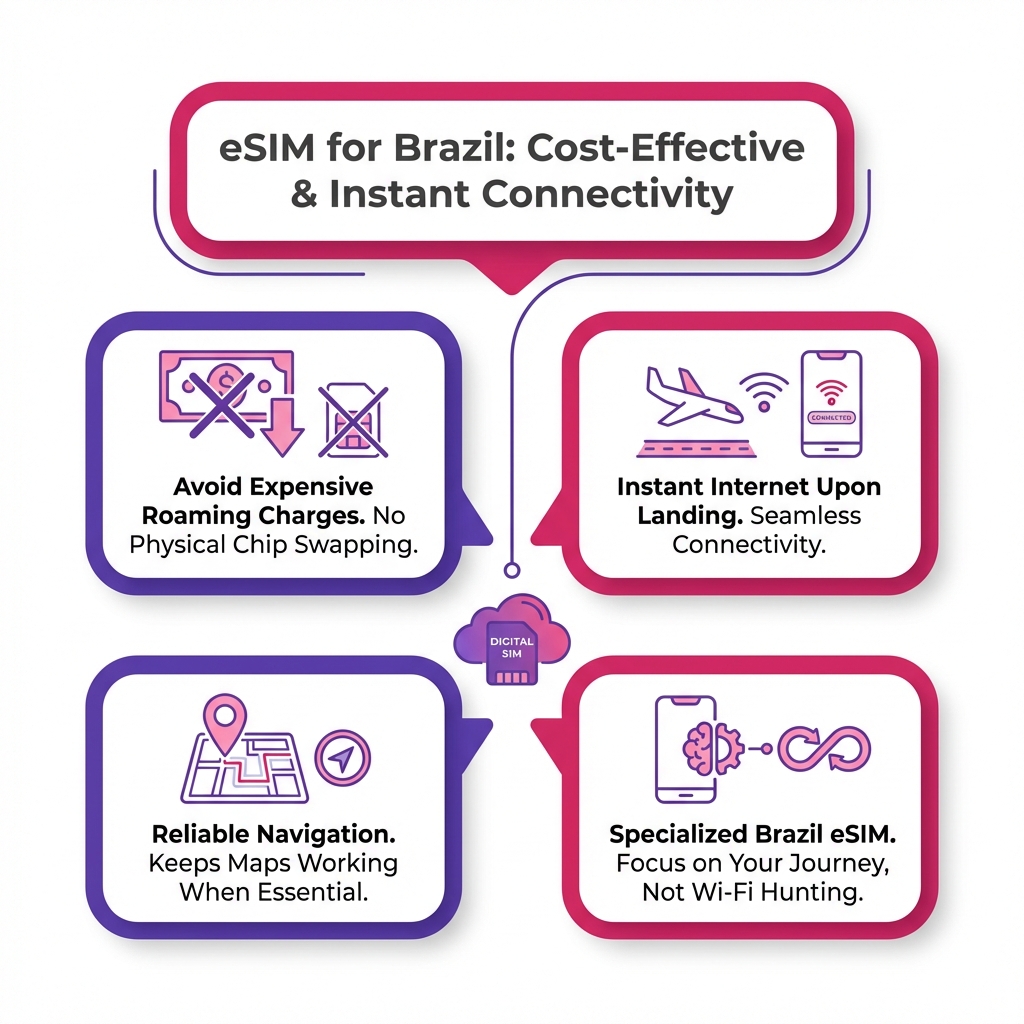
An eSIM lets you avoid expensive roaming charges without swapping physical plastic chips. You get online the moment you land at the airport. For seamless internet access, a specialized eSIM card for Brazil keeps you connected throughout the journey.
Having data immediately helped me navigate Rio's streets without hunting for Wi-Fi. It avoids the shock of roaming bills and keeps maps working when you need them most.
Connectivity is just one line item in the budget, though. What really moves the needle is the travel style you settle into once you land.
How does travel style affect your Brazil budget?
Your personal travel style determines how much you spend. Where you choose to sleep and eat directly impact your daily bottom line. While budget travelers save by using public transit, travelers who want more comfort will naturally spend more.
- Pick a place to sleep that matches your budget: dorm bed, mid-range hotel, or upscale hotel.
- Decide how often you'll eat out versus cook or grab street food.
- Choose your default transportation: public transit, taxis and rideshares, or a rental car.
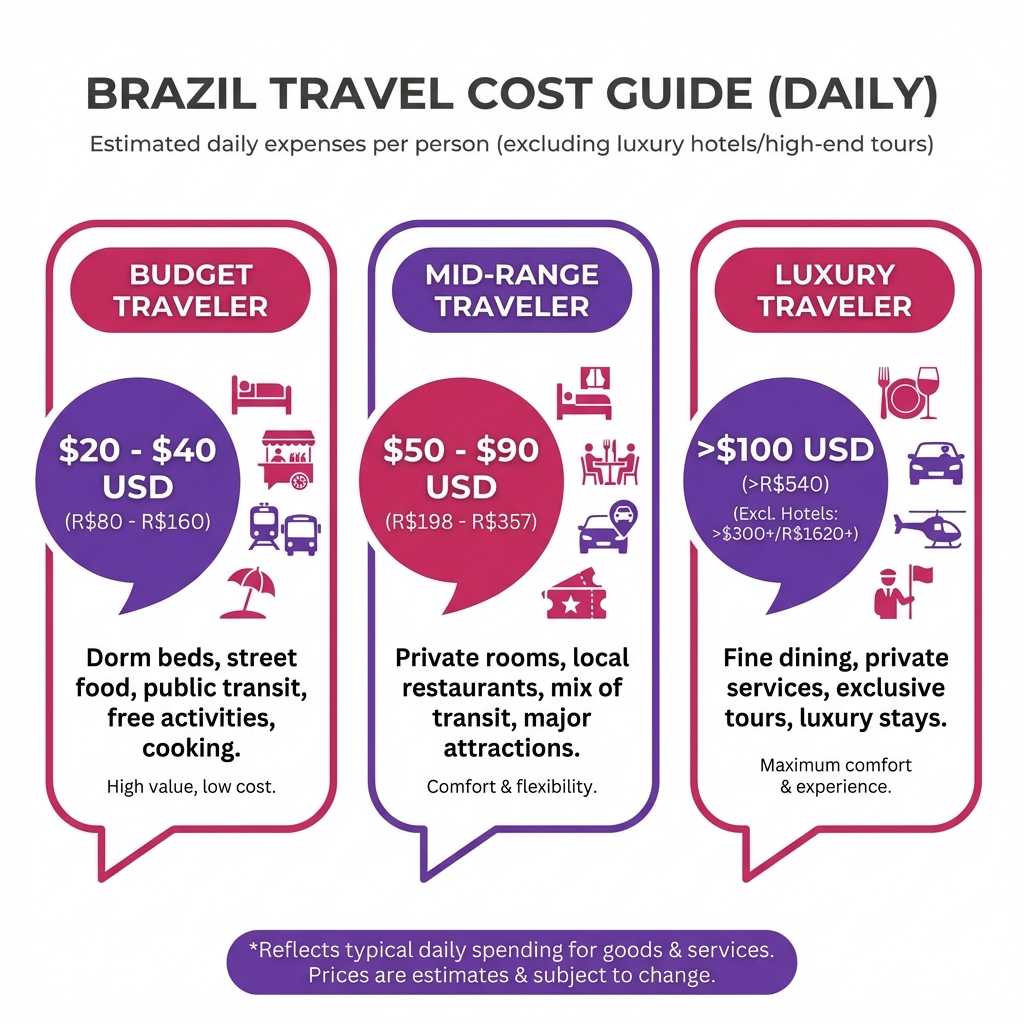
What is the cost for a budget traveler?
Backpackers typically spend $20 to $40 (R$80 to R$160) per day, not counting lodging. You can stay in this range by choosing dorm beds in hostels or inexpensive guesthouses. Eating at street stalls rather than sit-down restaurants keeps your food bill low.
Using public transportation like metros and buses is key for this budget. You can also save by sticking to free spots like beaches and parks. Buying ingredients to cook your own meals is a great way to keep your daily spending low.
What is the cost for a mid-range traveler?
Mid-range travelers can expect to spend $50 to $90 (R$198 to R$357) daily. This budget gives you a mix of comfort and value, allowing for private hotel rooms or vacation rentals. It also covers meals at established restaurants serving local cuisine.
At this price point, transportation includes a mix of public transit and private rideshares. You can also afford entrance fees for major attractions and occasional guided tours. Keeping some cash in local currency gives you flexibility without overspending.
What is the cost for a luxury traveler?
For a luxury experience, plan on spending at least $100 (R$540) per person daily, excluding hotels. This covers fine dining in foodie hotspots like Sao Paulo and private chauffeur services. High-end tours, such as helicopter flights, will add to the total.
Luxury accommodation often costs more than $300 (R$1,620) per night. This budget means you'll be very comfortable throughout your Brazilian adventure.
How can you save money on your trip to Brazil?
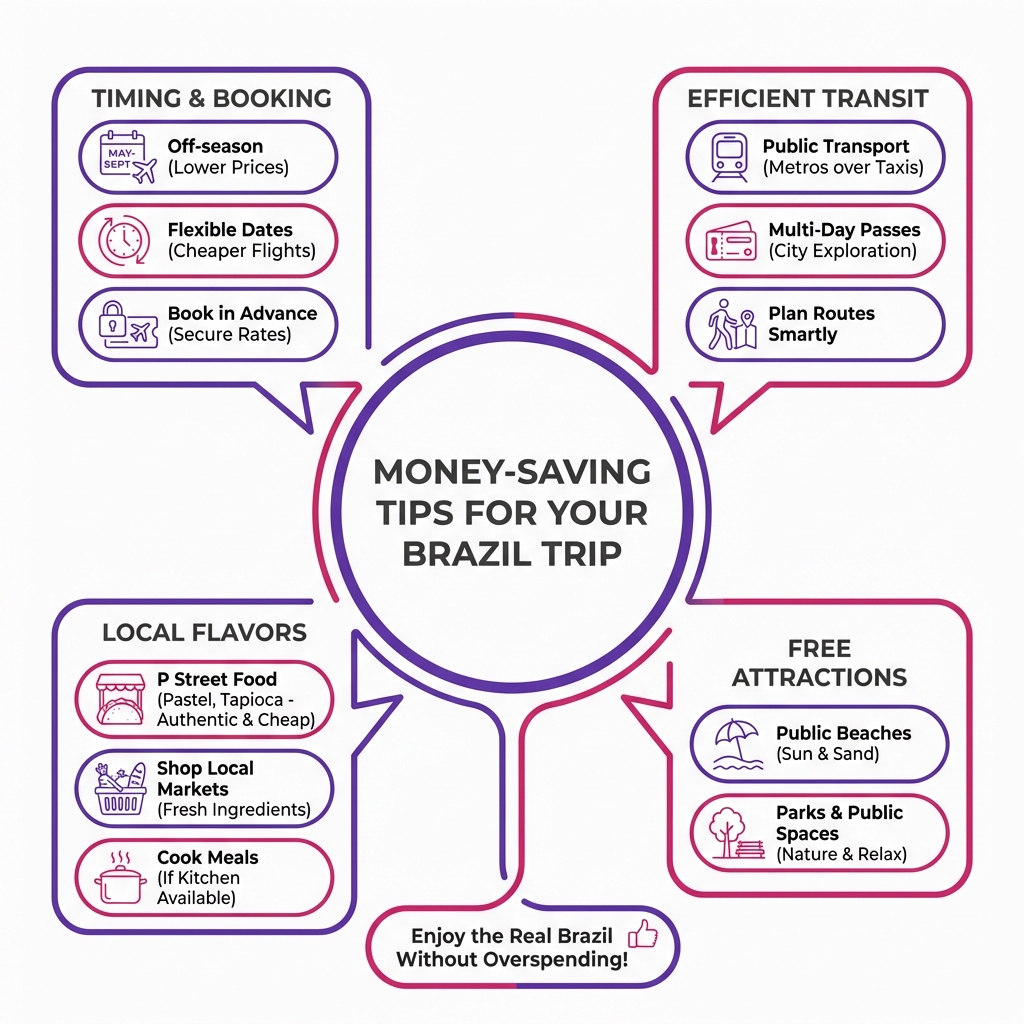
Cutting costs is easy if you know a few tricks.
- Visit during the off-season (May to September) for lower flight and hotel prices.
- Keep travel dates flexible to find the cheapest departure options.
- Book hotels and internal flights in advance to secure better rates.
- Use public transportation like metros instead of taxis to reduce daily transit fees.
- Buy multi-day transport passes for extensive city exploration.
- Eat street food like pastel or tapioca for authentic flavors at low prices.
- Shop at local markets and cook meals if your lodging has a kitchen.
- Enjoy free attractions such as public beaches and parks.
Using these tips keeps your costs down without forcing you to miss out on the real Brazil.
Should you tip and haggle in Brazil?
Tipping is common but often automatic; restaurants usually add a 10% service charge to the bill. It's technically optional. You can ask to have it removed if the service was poor, but that's rare in practice. You don't have to tip more than that, though small extra amounts for excellent service are appreciated. This applies to bartenders, housekeeping, and guides.
But haggling is mostly for street vendors and markets, not retail stores. Prices in shopping centers are fixed. If you do negotiate at open-air stalls, carry small bills to keep things friendly.
Sources